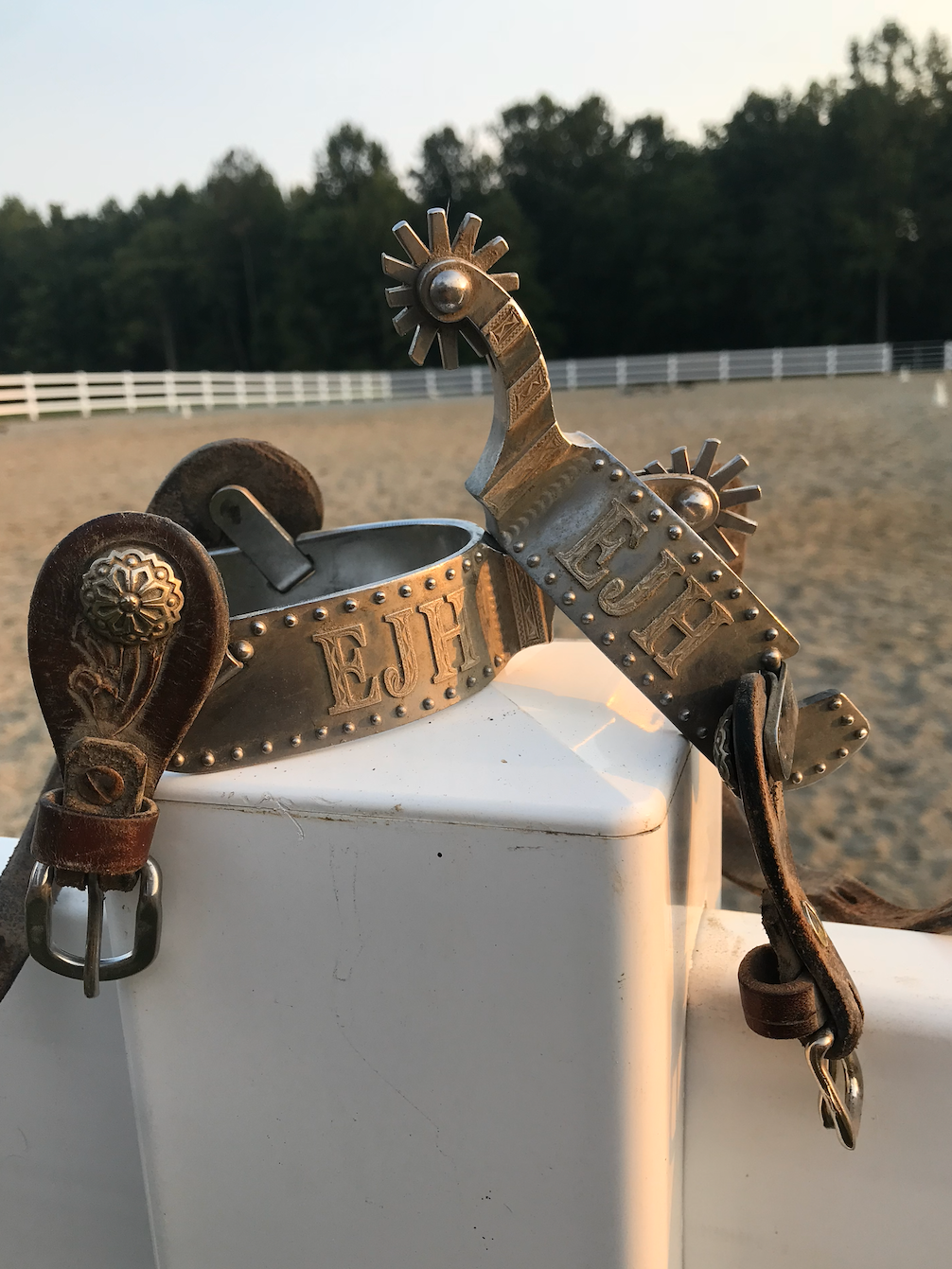
The gift of horsemanship I wouldn’t have gained from the H/J world
There have been many moments where I’ve struggled with feeling like I’m too far behind, got into the sport too late, am too green to showing and even jumping in general to ever get to where I want to be. This has been a big mental block I’ve had to overcome. The more I became immersed in the sporthorse world over the last few years, the more I realized the politics of how things were done, and the immensely wide gap separating those who rose to the top of the sport and those who didn’t. I witnessed for the first time in my life what a full service show barn is, how it operates, the clientele it carries and the quality of stock that comes with it. Coming from a humble western riding upbringing, this was quite surprising to witness. But quickly I realized this was how the sport operates and thrives, at least here in the US. Which began the cycle of having imposter syndrome and feeling totally out of place at times. Luckily I was too stubborn and determined to be better than the doubts and insecurities, which got me to where I am now - sharing about it and realizing I wouldn’t change a thing about my start with horses.
Some of my fondest memories are of my grandma and I working together on her farm. She owned around 30 acres in Virginia, and luckily for me my mom and dad built our house right next door to hers. I was also homeschooled until my freshman year of highschool, which allowed me to get my work done early and spend the rest of the day at the farm. The majority of my memories aren’t of me riding, however. They’re of grandma and I doing all the other chores revolved around horses and other farm animals. Picking stalls, fixing fences, mowing, making endless trips to tractor supply.. in the winter breaking ice in the water buckets and at times having to carry fresh water to the fields when the water pipes would freeze. I remember the worst job was picking rocks from the stone dust arena. That or stripping stall matts and cleaning and resetting them.. that was something we both dreaded!
As I got older and was capable of handling the horses on my own, I’d get up early and do the morning chores prior to starting school. Turnout, feeding, stalls, etc. The easy stuff that I never even thought twice about doing. I never did any of this in exchange for riding lessons.. it was just something I loved to do. I would get to ride my grandma or my aunts horses, but that wasn’t necessarily a priority of the day. The riding was casual and fun when it did happen.
Fast forward to being 19 and deciding to pursue horses in a professional manner, I moved to Texas and lived on a massive ranch working for trainer and horseman Clinton Anderson. I was there a year, where I learned to start colts and got my hands on many youngsters and “problem” horses. I easily spent just as much time on the ground with these horses as I did in the saddle. This time in Texas eventually enabled me to run my own colt starting operation out of my grandmas barn in Virginia.
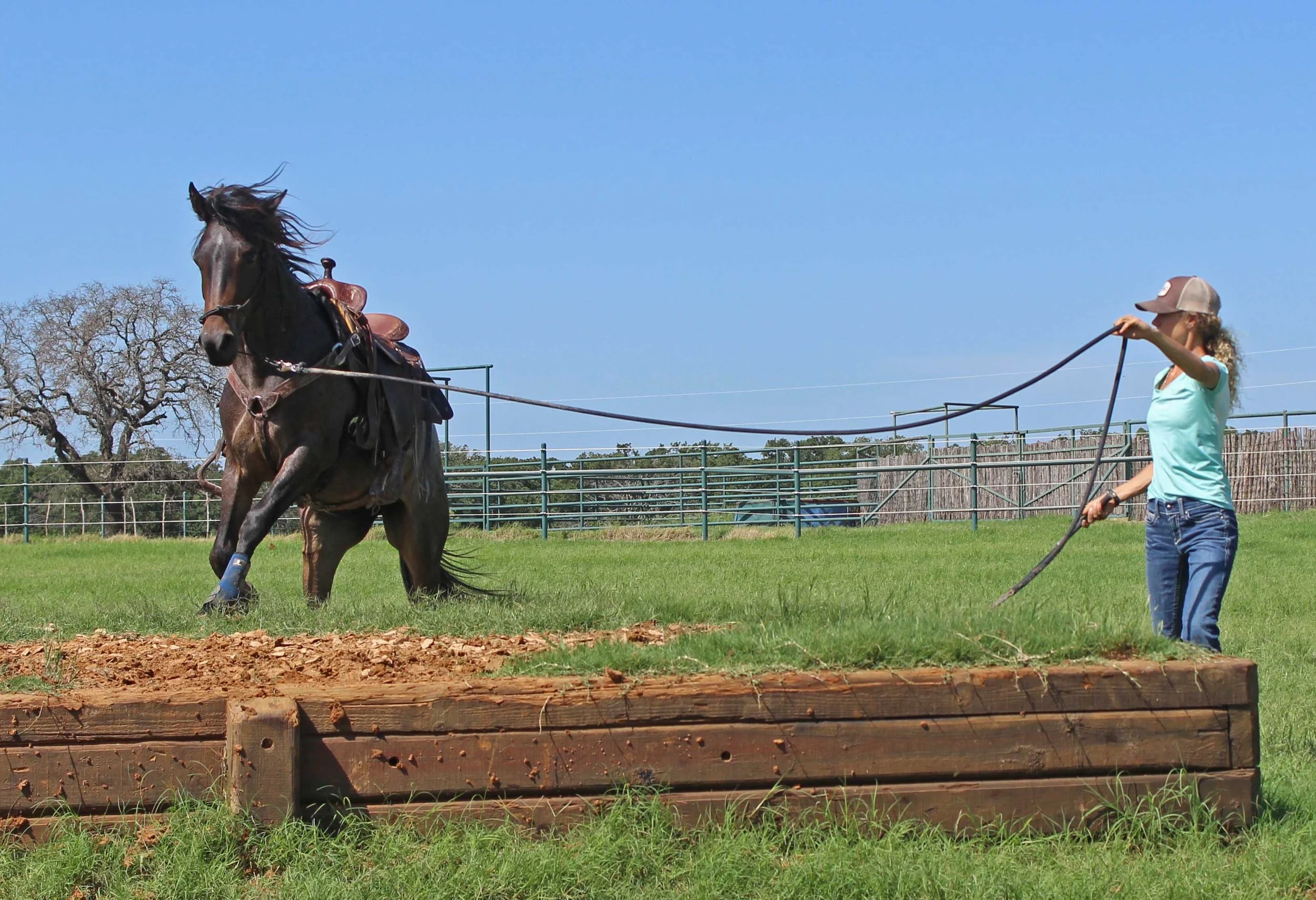
One of the colts I started at the ranch in Stephenville, Texas.
At this point in time, I still don’t think I had ever taken a formal riding lesson. I’d gotten plenty of help from my aunt who was an active rider, and a friend of hers too. But not the type of lessons you see today in the show barns or even local lesson programs.
Fast forward again, and I’m 25 years old finding my way into my first ever showjumper barn. I’d maybe worked with a handful of warmbloods prior to this? But it was mostly quarter horses, some paints, arabians, mustangs and even the spanish bred types like andalusians and lusitanos. So when I say I was GREEN to the world of hunters and jumpers and equitation… I am not over exaggerating! However the more educated I became to the life of english riding show barns, the more I realized that maybe I’m not so far behind after all. Don’t get me wrong, I have met some absolutely wonderful horsemen and women since making that switch from western to english. And I have learned that there are better ways than the old cowboy methods. But the flipside is this.. I spent hours reading books about how a horse thinks and why he reacts the way he does. I was given horses that strike, rear, refuse to trailer load, or have little to no education on the ground and under saddle. I was taught the concept of releasing pressure and rewarding the slightest try, and how to prepare a colt for his or her first ever saddling and then ride. How to teach young horses how to learn. All of this with no end goal of competing or showing off or chasing big goals and dreams. It was just part of the lifestyle I lived, there was nothing more to it than that.
Compare that to how many of today’s generation is being raised in the H/J barns. The students arrive and their horses are groomed, tacked up, and waiting for them in the cross ties. When they get there, a groom bridles them and leads them to the mounting block. Afterwards, they will bathe and ice and poultice legs if needed. Put back in the stall once ready. None of this is the clients fault - it’s what’s accessible and if you want to horse show, usually is the only option. For adults working full time jobs, this enables them to have the time to ride before or after work. So it does have its place! But the result for the majority is many good riders with little to no horsemanship. Which isn’t fair to the horses, and feeds into the consumerism we see so much of in the US. Buy or lease made horses … and that’s it. Hence the gap getting wider and wider separating those who can afford the sport, and those who can’t. This is also the reason raising youngstock is so few and far between here, especially when compared to Europe. The vast majority of riders here don’t know how to work with young horses. How would they when it isn’t apart of the culture?
All of this is to circle back and say .. I’m immensely grateful that I did not grow up in the show barns. That my parents didn’t buy me a pony to go do pony finals on. And that instead I found my way into the jumper barns later in life, and while I may have had no idea how to get into a two point position let alone see a distance to a fence.. I knew how to feel what the horse was doing underneath me. Could handle myself professionally and properly with the horses on the ground. And I do without a single doubt, believe this has helped me progress and learn at the rate that I have!
Moving forward I only hope that I can bring a good mix of both worlds to the horses I work with in the future..